How “optional” design services quietly turn into emergency costs in Beaumont and Southeast Texas.
““We’ll Skip That for Now”
Almost every project in Beaumont, TX or Southeast Texas faces this moment. The budget conversation tightens. The timeline feels urgent. Someone says:
“Do we really need that right now?”
Drainage studies. Structural coordination. Wind bracing logic. Utility routing. They sound optional. They feel technical. And when money’s on the line, they’re often the first things cut.
What most clients don’t realize is this: Those costs never disappear. They just change their name.
The Illusion of Savings
Skipping design services creates a short-lived sense of control:
- Fewer line items
- Lower upfront fees
- Faster path to permits (or so it seems)
But construction in Southeast Texas has a way of collecting unpaid debts—and it collects with interest. Industry data shows that projects with incomplete pre-construction coordination experience up to 30% more rework, and rework is one of the most expensive forms of construction waste.
You didn’t save money. You postponed the bill.
The “Invisible” Design Items Clients Skip
Let’s talk about the most common services clients decline—and how they come back later as emergencies on local projects.
1. Drainage Planning
What gets skipped:
- Site drainage logic
- Slopes, swales, and discharge paths
- Coordination with foundations and paving How it comes back:
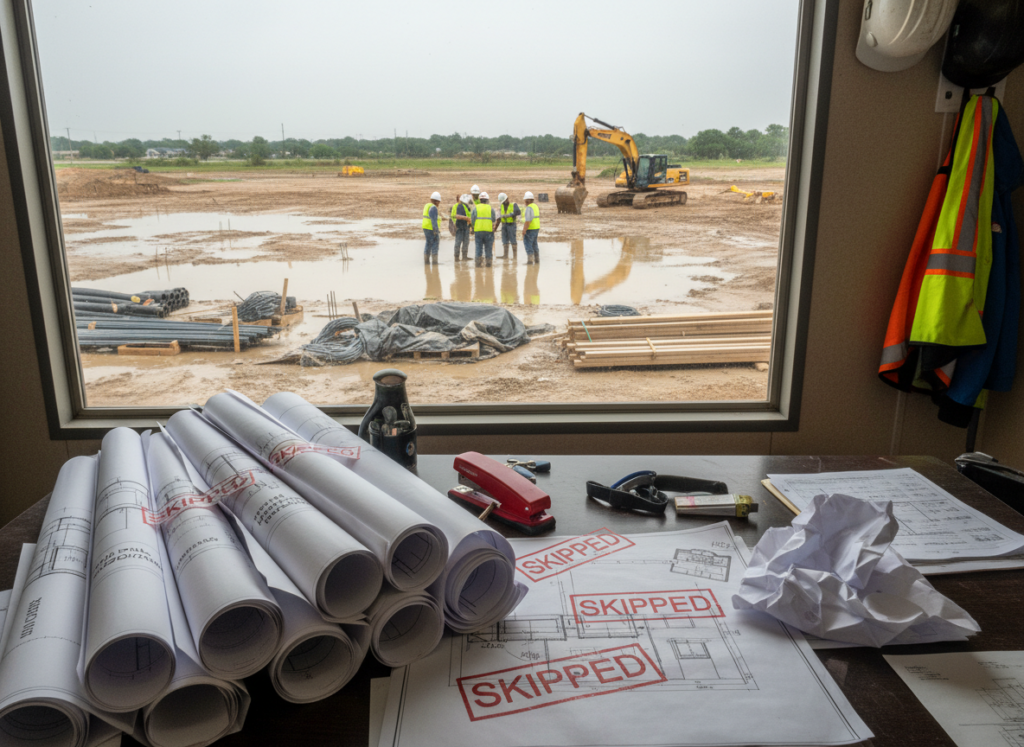
- Standing water
- Failed inspections
- Emergency regrading
- Foundation exposure or erosion Cost reality: A few thousand dollars in early drainage planning can prevent five-figure corrective work after construction.
2. Structural Coordination
What gets skipped:
- Load path verification
- Beam and column alignment
- Foundation-to-frame coordination How it comes back:
- Unexpected steel additions
- Over-sized members added late
- Expensive structural change orders Cost reality: Late structural fixes often carry 10–20% cost premiums due to material rush orders and labor disruption.
3. Wind & Bracing Logic
What gets skipped:
- Lateral load design
- Uplift resistance strategy
- Connector and tie-down coordination How it comes back:
- Failed windstorm inspections
- Retrofits during construction
- Delays waiting on engineer revisions Cost reality: Retroactive wind compliance is rarely elegant—and almost never cheap.
4. Utility Routing
What gets skipped:
- Clear utility paths
- Conflicts between plumbing, HVAC, and electrical
- Vertical and horizontal clearance checks How it comes back:
- Field conflicts
- Rerouted ductwork
- Cut framing
- Reopened slabs or ceilings Cost reality: Industry studies show that RFIs and field coordination issues account for nearly half of construction disputes.
The “You Skipped This” Checklist
| Skipped Early | Comes Back As |
|---|---|
| Drainage planning | Emergency site work |
| Structural coordination | Costly change orders |
| Wind logic | Failed inspections |
| Utility routing | Field conflicts |
| Permit coordination | Delays & resubmittals |
Same work. Different phase. Much higher cost.
Why These Costs Hurt More Later
When design services are skipped early, any correction later happens under pressure:
- Crews are already mobilized
- Materials are already ordered
- Financing draws are already scheduled
That pressure creates premium pricing. Studies consistently show that fixing a problem during construction costs 6–10 times more than solving it during design.
That’s not inefficiency. That’s physics.
The Emotional Cost Nobody Budgets For
Beyond the invoices, skipped design creates:
- Contractor frustration
- Design blame-shifting
- Owner anxiety
- Loss of confidence in the project
Suddenly every decision feels risky, because it is. This is when projects stop feeling intentional—and start feeling reactive.
The Mic-Drop Truth
You either pay for design up front—or for fixes later. There is no third option.
Why Smart Clients Do It Differently
Experienced owners, developers, and lenders don’t ask, “How much can we skip?” They ask, “Where is the risk hiding?”
They understand that design services are not overhead—they are insurance against chaos. Early coordination:
- Reduces change orders
- Protects schedules
- Preserves financing confidence
- Keeps decisions calm instead of desperate
That’s not luxury. That’s discipline.
Final Takeaway
If a design service feels “optional,” ask this instead:
- What happens if this fails?
- When would we discover the problem?
- How expensive would the fix be after construction starts?
Because the most expensive design decisions are the ones made by accident.
Want Fewer Surprises?
The goal of design isn’t perfection—it’s predictability. If you want a project in Beaumont or Southeast Texas that:
- Passes inspections the first time
- Avoids emergency fixes
- Protects your budget when pressure hits
those decisions must be made before the field makes them for you.
Contact ONYRverse Digital Designs for design-first project management, pre-construction coordination, and local expertise that keeps your project on track